
Boost lower body strength, build endurance, and fire up your core with this simple but deceptively challenging static move – no equipment or big space needed. Perfect for beginners and athletes alike, the Wall Sit delivers a serious burn to your thighs and glutes in under a minute
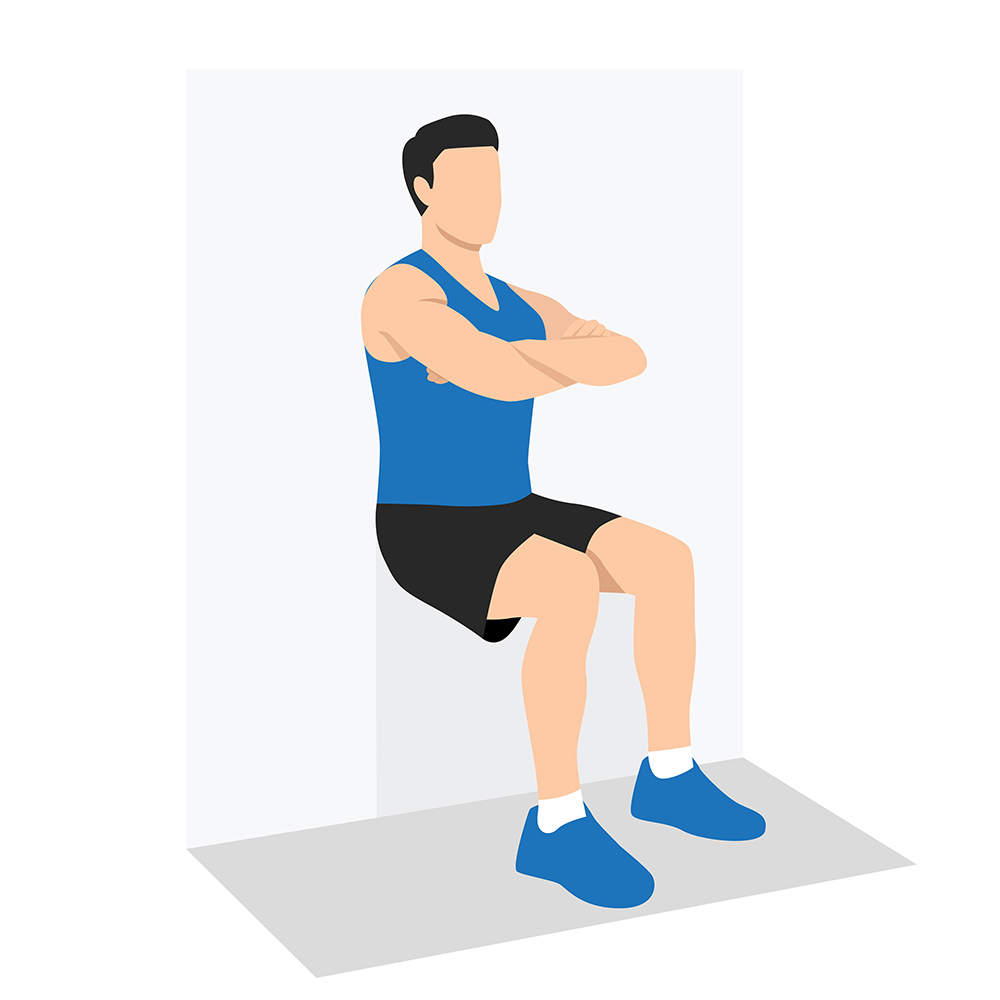
How to do it
- Stand with your back against a wall, feet shoulder-width apart and about 60cm (2 feet) away from it.
- Slide your back down the wall until your knees are bent at roughly 90 degrees, as though you’re sitting in a chair. Your thighs should be parallel to the floor.
- Check your position – knees stacked above ankles (not past your toes) and back flat against the wall.
- Engage your core, relax your shoulders, and hold the position for 20–30 seconds to start with. As you get stronger, aim for 45–60 seconds.
- Stand up slowly, rest for 30–60 seconds, then repeat for 2–3 sets.
What it's good for
This move targets your quadriceps, hamstrings and glutes, while also engaging your core to keep you steady. It’s great for building muscular endurance, improving lower-body strength, and boosting stability. Plus, it’s equipment-free and easy to do anywhere – at home, in the gym, or even in the office. This move is also known as an ‘isometric’ exercise, as it neither requires lengthening nor shortening of the working muscles. Isometric exercises can be easier on the joints, as there is no additional movement, and they could also lead to bigger muscular endurance gains than other types of movement.
Top tips
- Engage your core throughout to protect your back and improve stability.
- Keep your knees in line with your ankles and hips – never pushed forward past your toes.
- Breathe steadily – don’t hold your breath.
- Start with shorter holds and build up over time.
- Keep your back pressed flat against the wall to avoid strain.
Modifiers
- Beginner-friendly: Don’t lower all the way to 90 degrees – aim for a shallower bend.
- Advanced: Hold a weight or medicine ball, or lift one foot slightly (switch halfway).
- Extra support: Place a stability ball between your back and the wall to make sliding easier.
What to avoid
- Don’t arch your back – keep it flush with the wall.
- Avoid locking your knees when you finish – stand up slowly to prevent dizziness.
- Don’t overdo it – too long, too soon can lead to fatigue or strain.
- Avoid placing your feet too close to the wall, which can cause knee discomfort.

PT Matt Surridge has over 10 years’ experience in the fitness industry and a background in sport and exercise science, Matt is committed to helping others achieve a balanced, healthy lifestyle. Providing support on exercise and nutrition, ensuring members have the tools needed to reach their goals, while offering practical advice and encouragement every step of the way.